Hi, it’s Vanessa, your ENLIGHTENMENT host.
In terms of global politics, it’s an interesting time to be an American. And it’s a interesting time to be an Iranian. So it’s certainly an interesting time to be an Iranian American.
California has by far the highest Iranian population in the United States — half of all Iranian Americans live in the Golden State. In fact, outside of Iran, the largest concentration of Iranians live in Los Angeles County.
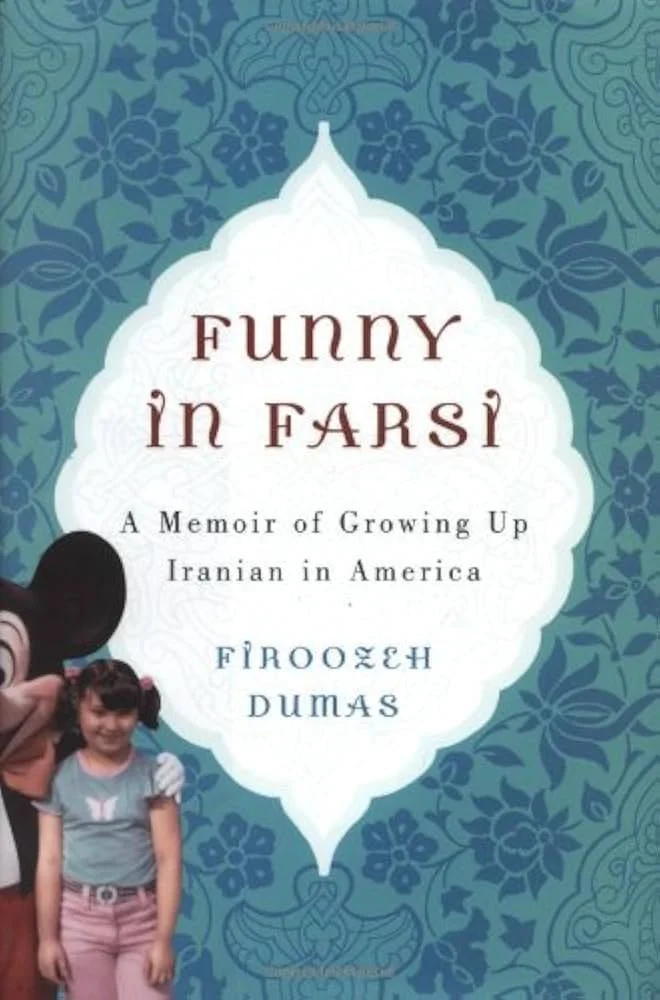
Because of those facts, the latest pick for my bimonthly book club of fiction/non-fiction focused on the Golden State is Funny in Farsi: A Memoir of Growing Up Iranian in America by Firoozeh Dumas. This 2004 book is a humorous take on the intersection and overlapping of two cultures.
Along with the book, I invite a special guest to each club meeting, someone who is an expert or very connected to the theme of the book and can answer our questions about the topic. So even if you haven’t finished/read the book, you can still follow along.
This time, I’ve invited Sahar Razavi, director of the Iranian and Middle Eastern Studies Center at CSU Sacramento, to talk with us about the relationship between Iran and America, and how it pertains to those who have a foot in both countries and cultures.
So bring your comments, opinions and questions — nothing is too small or dumb to discuss.
Below is a summary of Funny in Farsi. Join me for a talk about cross-cultural misunderstanding and family life, and how immigrants from anywhere adapt to life in California.
Tickets are $5 (not including Eventbrite's fee) to cover refreshments; you are welcome to BYO.
Claim your seat - Register here on our Eventbrite page.
*****
In 1972, when she was seven, Firoozeh Dumas and her family moved from Iran to Southern California, arriving with no firsthand knowledge of this country beyond her father’s glowing memories of his graduate school years here. More family soon followed, and the clan has been here ever since.
Funny in Farsi chronicles the American journey of Dumas’s wonderfully engaging family: her engineer father, a sweetly quixotic dreamer who first sought riches in Las Vegas and later lost his job during the Iranian revolution; her elegant mother, who never fully mastered English (nor cared to); her uncle, who combated the effects of American fast food with an army of miraculous American weight-loss gadgets; and Firoozeh herself, who as a girl changed her name to Julie, and who encountered a second wave of culture shock when she met and married a Frenchman.
In a series of deftly drawn scenes, we watch the family grapple with American English (hot dogs and hush puppies?—a complete mystery), American traditions (Thanksgiving turkey?—an even greater mystery), and American culture (Firoozeh’s parents laugh uproariously at Bob Hope on television, although they don’t get the jokes even when she translates them into Farsi).
Above all, this is an unforgettable story of identity, discovery, and the power of family love. It is a book that will leave us all laughing—without an accent.